
Notes
html / 1 to 4
❚ Thy Lotus Feet
❝
O Mother I throw myself on Thy mercy
I take shelter at Thy Hallowed Feet
I do not want bodily comforts
I do not crave name and fame
I do not seek the eight occult powers
Be gracious and grant that I may have pure love for Thee
A love unsmitten by desire untainted by any selfish ends
A love craved by the devotee for the sake of love alone
And grant me the favour O Mother
That I may not be deluded by Thy world bewitching maya
That I may never be attached to the world
To lust and gold conjured up by Thy inscrutable maya
O Mother there is no one but Thee whom I may call my own
Mother I do not know how to worship
I am without austerity
I have neither devotion nor knowledge
Be gracious Mother and out of Thy infinite mercy
Grant me love for Thy Lotus Feet.

— GUGUPTA, Mahendranath (M.). The Gospel of Sri Ramakrishna. Translation and Introduction de Swami Nikhilananda. New York: Ramakrishna-Vivekananda Center, 1942. Cap. 38, “With the Devotees in Calcutta”, section “Master’s prayer”.

❚ The World is Old Tech
❝
Neither analog nor digital,
neither natural nor artificial.
The world is Old Tech.
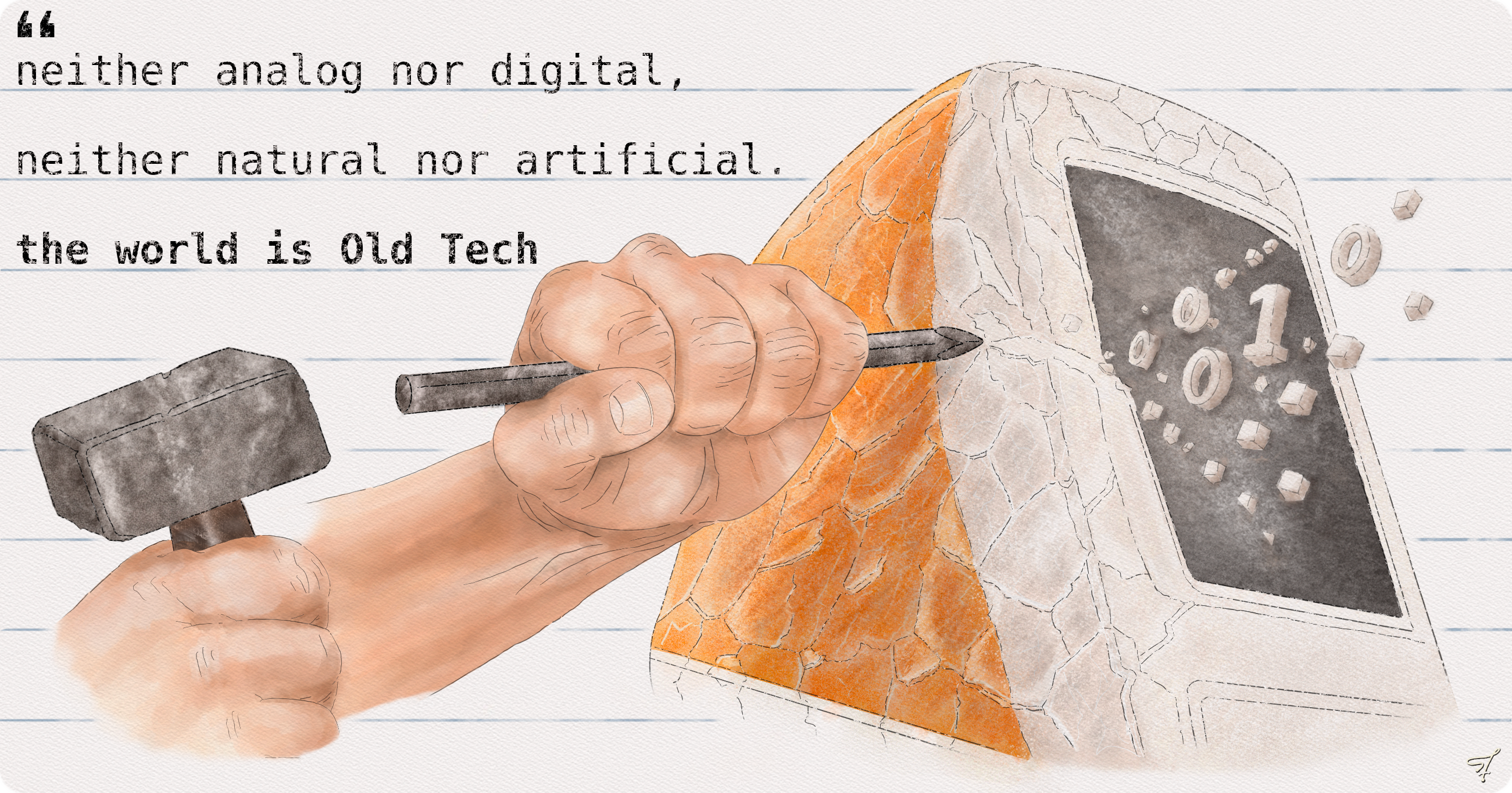
The “Scan(m) for AI text” motivates this note. Judging something in isolation by its final appearance and drawing conclusions about the process that produced it is speculative. When promoted on the basis of a claimed degree of technical certainty, it fosters distrust of the character of the individual, who is left with about 500 characters to justify their humanity in “How I make this” or the option of disabling the check, both alternatives resulting in premature judgment.
The risk is rejecting content based on an AI’s verdict, on the grounds of rejecting the use of AI. One does not choose between good and evil, but between two “evils”: the AI that simulates writing and the one that simulates the judgment of authorship. At the end of the day, however, no one is really evaluating which of these systems is better implemented. It is the author and their personal choices that are under scrutiny. We ourselves have already grown accustomed to speculating a great deal about this, based on textual fragments extrapolated to the point of becoming a measure of character. In this sense, both in writing and in evaluation, the human and the technical-mathematical form a fine pair, for they reflect the culture fixated on the result, which perpetuates the cliché that the ends justify the means.
The term “artificial intelligence” dates from 1955; the name stuck and now applies to LLMs, in which technicist idealism still persists. It is a metaphor that sells, as do “reasoning”, “thinking”, “writing” and hundreds of others that computer science borrows from other fields and that sound simply perfect for academic publication and the lay community of headlines.
“Artificial”, as a promise of the technical reproduction of a higher faculty, and “intelligence”, as a spiritual, philosophical or psychological term, confer disciplinary identity and favor dissemination in the economy of ideas; they work in practically all languages and advertise the product without the need to list its ingredients.
In this market, the brand and the packaging become the soul of the business and conceal the fact that the natural resource in increasingly short supply is the very natural intelligence of those who now subordinate themselves to the product’s “creativity” and “judgment”. Under one veil or another, the result lies between the emulation and the dissimulation of humanity itself, whether it comes from the individual already culturally indoctrinated or from their computationally implemented simulation.
❚ In Search of the Miraculous
❝
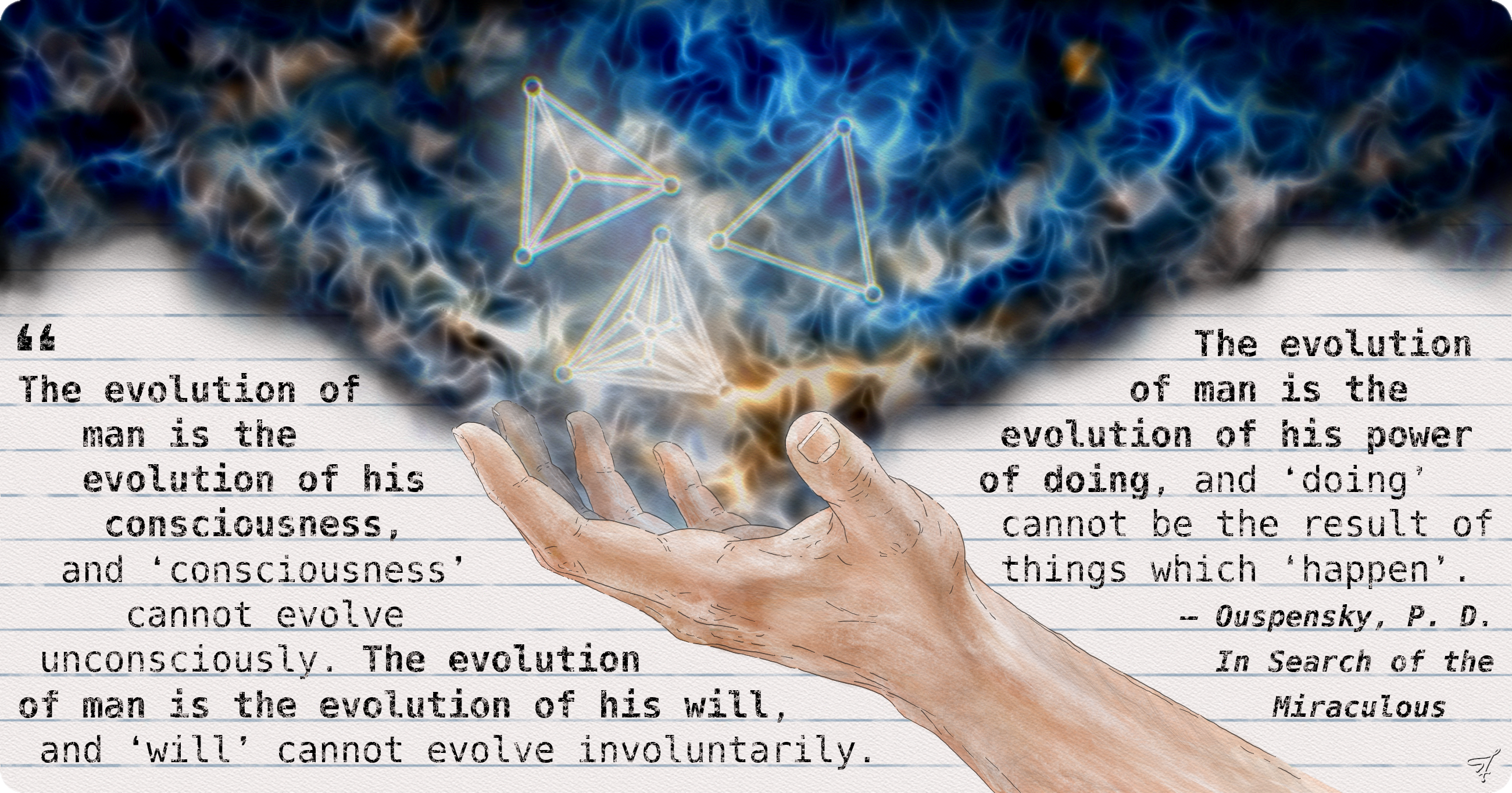
The evolution of man is the evolution of his consciousness, and ❛consciousness❜ cannot evolve unconsciously. The evolution of man is the evolution of his will, and ❛will❜ cannot evolve involuntarily. The evolution of man is the evolution of his power of doing, and ❛doing❜ cannot be the result of things which ❛happen.❜

— Ouspensky, P. D. In Search of the Miraculous. 1949.
❚ The Ambivalence of Love
❝
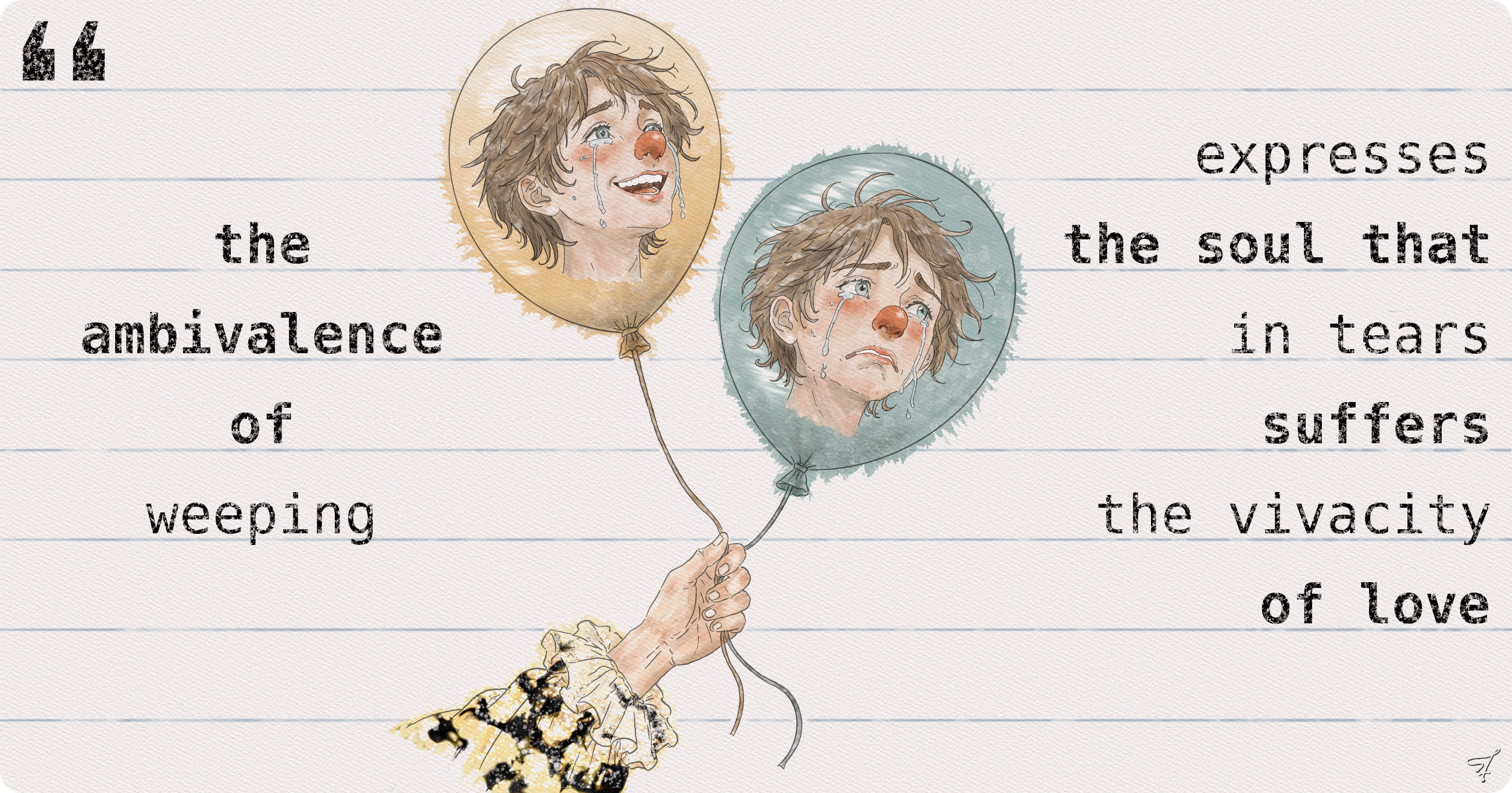
the ambivalence of
weeping expresses
the soul that
in tears
suffers
the vivacity
of love
one poem ❙ two polarities ❙ three readings
If you’d like to support this publication, you can make a one-time contribution. A free subscription allows you to be part of the community and helps make this work more visible.